



Crypto Fund Trader Review — A Prop Firm for Crypto Traders: Reviews, Features, Trading Guide

The crypto market in 2026 offers traders entirely new ways to earn, but many run into a classic problem — not enough starting capital. That’s exactly where prop firms come in, providing funding to talented traders with no need to risk their own money. In this article, the PropTradingRank.com team takes a detailed look at a genuinely interesting player in the market — Crypto Fund Trader, a prop firm specializing in crypto trading and offering access to capital up to $300,000. We reviewed the platform’s features, analyzed real trader reviews, broke down the challenge terms, and put together a step-by-step guide for anyone who wants to start earning on crypto with someone else’s money, with no risk to their own savings.
 5% off promo code. Use code platinum5 to get 5% off any challenge at Crypto Fund Trader. The code is valid only when you sign up for a new account through our link.

Crypto Fund Trader stands out among dozens of competitors thanks to several key advantages: 715+ crypto trading pairs, spreads from 0 pips, leverage up to 1:100, and profit payouts twice a month with an 80/20 split in the trader’s favor. The company was founded in 2021 and is registered in Spain under CEO Alan Sanchez. Over three years in business, the platform has attracted more than 500,000 traders from countries across the globe. We’ll take a detailed look at how this prop firm works, what pitfalls might be waiting for beginners, whether it’s worth entrusting your time and effort to this platform, and most importantly — how to actually get funded and start withdrawing profit. Ready to dive into the world of professional crypto trading? Let’s go!

What Crypto Prop Trading Is and Its Features in 2026
Prop trading (short for proprietary trading) is a business model where a trader trades not with their own money, but with a specialized company’s capital. In exchange for access to significant sums (from $2,000 to $300,000 and beyond), the trader shares part of their profit with the firm, usually under an 80/20 or 90/10 split in their favor. The core appeal of this model is minimal risk for the trader themselves: even if they blow the account, their personal savings stay intact. A loss just means losing access to someone else’s capital and the entry fee paid for the challenge.
Crypto prop trading became its own dynamic, fast-growing segment by 2026. Where most prop companies used to specialize in Forex, stocks, or futures, more and more firms now open accounts on crypto exchanges — Binance, Bybit, OKX. That gives traders the chance to work with a 24/7 market, high volatility, and hundreds of trading pairs, but demands iron discipline in risk management. The prop model has become a full-fledged alternative to classic broker trading, especially for anyone unwilling to invest their own money but confident in their skills.

In crypto prop trading, a trader uses the firm’s capital to trade digital assets — Bitcoin, Ethereum, altcoins, and derivative instruments like futures and perpetuals. The company takes on the financial risk, and in exchange sets strict capital-management rules: daily loss limits, maximum drawdown, bans on trading during major news, and position-size controls. Breaching even one rule typically leads to an automatic account lockout, and payouts get voided.
Key features of crypto prop trading in 2026:
- A two-stage challenge — to get a real funded account, a trader first clears an evaluation on a demo account, proving they can hit profit targets without exceeding loss limits
- High crypto market volatility — round-the-clock trading and sharp price moves demand more conservative risk management than Forex or stocks
- Access to hundreds of trading pairs — prop firms like Crypto Fund Trader offer 715+ crypto pairs, including exotic altcoins
- A flexible schedule — crypto trades 24/7, letting you combine prop trading with a day job or trade whenever suits you
- An aggressive profit split — most crypto prop firms split profit in the trader’s favor (80–90%), better than the classic 50/50 model
- Leverage up to 1:100 — lets you open larger positions with less capital, but raises risk at the same time
- Fast payouts — payouts run one to two times a month, significantly faster than traditional funds
- A minimal entry threshold — some companies let you start with a $50–100 challenge, making prop trading accessible even to beginners
- Automation and a remote format — every process happens online: from registration and challenge payment to verification and receiving payouts
- Strict risk-management rules — companies set a trailing drawdown that moves along with account growth, and a daily loss limit that caps losses within a single trading day

Crypto prop trading isn’t “fast money” — it’s a professional tool for disciplined traders willing to trade by clear rules and show consistent results. In 2026, this model became especially popular among arbitrage traders and active traders worldwide looking for a way to scale their strategies with no risk of losing their own capital.
The Story Behind Crypto Fund Trader
Crypto Fund Trader (CFT) was founded in 2021 — right at the peak of the crypto boom, when Bitcoin was setting new all-time highs and interest in digital assets was skyrocketing. The company is registered in Spain under CEO Alan Sanchez, who saw huge potential in combining the classic prop model with the growing crypto market. The idea was simple but revolutionary: give talented crypto traders access to significant capital, bypassing traditional barriers like needing personal savings or hunting for investors.
At launch, the project looked like a typical fintech-niche startup — a small team, a minimalist site, and basic functionality. But the founders bet on several key differentiators from competitors: an extremely wide selection of trading pairs (more than 700 right off the bat), the ability to trade through popular exchanges like Binance and Bybit, and flexible challenge terms with different difficulty levels. That drew the attention of professional traders looking for an alternative to Forex prop firms who specifically wanted to work with crypto — a more volatile and promising asset.
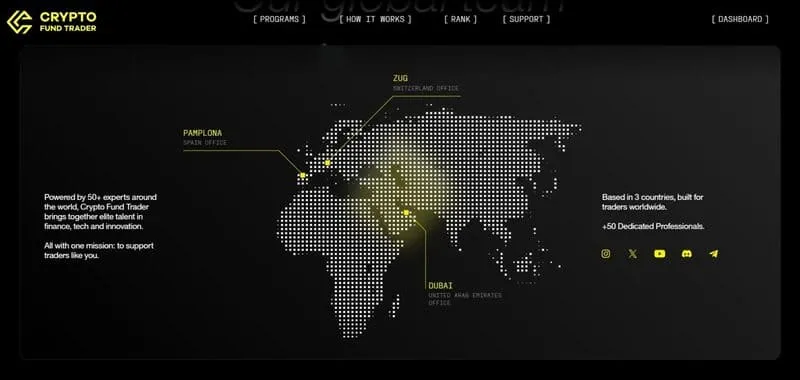
Over three years in business, Crypto Fund Trader went from a little-known platform to one of the largest crypto prop firms with an international audience. As of 2024–2026, the platform has drawn in more than 500,000 registered users from countries across the globe, with a strong presence throughout Europe as well as growing bases in the Americas and Asia — a spread that shows the company has earned trust from traders in regions with very different levels of financial literacy and capital access.
A defining moment in CFT’s history was expanding its partner programs and introducing a referral-reward system. The company began actively working with arbitrage traders and bloggers in the crypto community, offering promo codes for 5–10% discounts on challenge purchases. That helped scale the business and bring in thousands of new traders, many of whom learned about the platform through Telegram channels, YouTube reviews, and niche forums. In effect, CFT used a classic viral-marketing strategy adapted for a crypto audience.

Despite its fast growth, the company hasn’t been without criticism and controversy. Negative reviews periodically surface online from traders accusing the platform of unjustified account lockouts, payout delays, or overly strict rules. Some users complain about a lack of clear regulation and transparency in how support operates. That said, on popular review platforms like Trustpilot, the company holds mixed ratings: some praise fast withdrawals and a convenient interface, while others criticize the strict terms and losing a deposit on the challenge.
Crypto Fund Trader Features and Capabilities
Crypto Fund Trader offers traders a fairly rich set of tools and terms that set the platform apart from competitors. Its main draw is a specific focus on crypto, letting you work with hundreds of trading pairs, including Bitcoin, Ethereum, altcoins, and perpetual futures. The company provides access to capital from $5,000 to $300,000, opening opportunities for both beginner traders and pros with proven strategies. Let’s take a closer look at exactly what the platform offers and what terms await users.

One of CFT’s key features is a choice between several challenge types with different difficulty levels and pricing. A trader can pick a one-step or two-step evaluation depending on their experience and risk tolerance. The one-step challenge is faster and simpler: you just need to hit one profit target without breaking the risk-management rules. The two-step challenge has a lower entry cost but requires clearing two verification phases — first proving you can earn, then showing consistency. After successfully clearing the challenge, the trader gets a funded account and can start withdrawing real profit.
The platform works with popular crypto exchanges, giving traders a familiar trading environment. You can use the Binance, Bybit, or OKX terminals — the exact interfaces many crypto traders are already used to. That’s a huge plus, since you don’t need to learn some custom platform or put up with proprietary-software glitches. Every order, stop, and take-profit works the same way as on a regular exchange account, except the capital belongs to the company, not you.
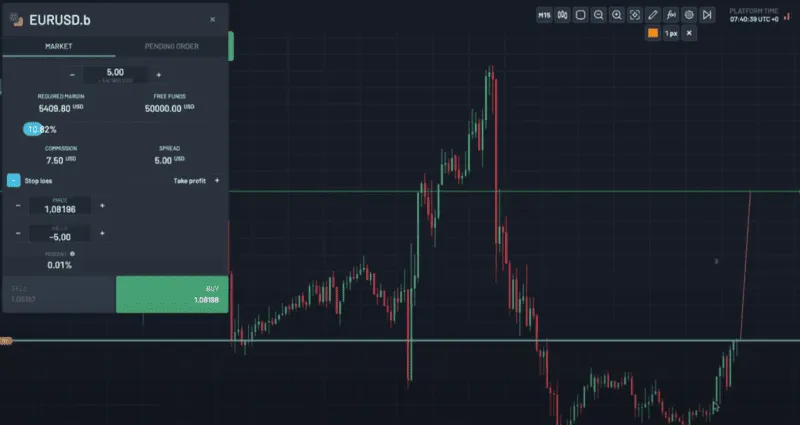
Core platform features and advantages:
- 715+ crypto trading pairs — from majors like BTC/USDT and ETH/USDT to exotic altcoins and DeFi tokens
- Leverage up to 1:100 — lets you open larger positions with less margin required, critical for scalping and intraday strategies
- Spreads from 0 pips — minimal fees on popular pairs, cutting trading costs
- 80/20 profit split — the trader keeps 80% of earned profit, with the rest going to the company
- Payouts twice a month — money can be withdrawn every two weeks, faster than many competitors with monthly payouts
- Capital up to $300,000 — the ability to scale trading after successfully clearing several challenges
- One-step and two-step challenges — flexibility in choosing your evaluation program based on experience and budget
- Trailing Drawdown — a drawdown that moves along with account growth, protecting the trader from sharp reversals
- Trading on popular exchanges — access to Binance, Bybit, and OKX terminals with no need to learn a new interface
- A referral program — the ability to earn extra by inviting other traders through your link
- Round-the-clock support — support runs 24/7, important for a crypto market that never sleeps
- Promo codes and discounts — regular 5–10% discount promotions when buying challenges through partner channels
Now let’s break down the terms of the different challenge types in a convenient table format. This will help you understand which option fits you best, depending on your budget, experience, and trading strategy.
Table: Comparing Crypto Fund Trader Challenge Types.
Parameter One-Step Challenge Two-stage challenge
Number of phases Phase 1 of the assessment 2 evaluation phases (Phase 1 + Phase 2)
Profit Target (Phase 1) 10% of the initial balance 8% of the initial balance
Profit Target (Phase 2) Not required 5% of the initial balance
Maximum drawdown 5% of the starting balance 5% in Phase 1, 5% in Phase 2
Daily Loss Limit 5% of the current balance 5% in Phase 1, 5% in Phase 2
Minimum trading days 5 days of active trading 5 days in Phase 1, 5 days in Phase 2
Entry fee 30-40% higher than two-stage Below is a more affordable option.
Speed of passage Faster - One Phase Longer - two phases
Profit Split 80/20 in favor of the trader 80/20 in favor of the trader
Leverage Up to 1:100 Up to 1:100
Payments Twice a month after completion Twice a month after completion
It’s important to understand that CFT’s feature set isn’t just access to capital — it’s also a strict control system. The company uses automated trade monitoring: if you exceed your daily loss limit or maximum drawdown by even a dollar, the account gets locked instantly. Practices like copy trading from other accounts, using high-frequency (HFT) bots without approval, trading during major news, and holding positions over the weekend with elevated risk are also banned.

Another interesting feature is scaling. If you successfully clear a $10,000 challenge and earn consistently for several months, the company may offer you an increased account — up to $100,000 or even $300,000. That said, you need to show ironclad consistency and never break the rules. In effect, CFT works like a meritocracy: the better you trade, the more capital gets entrusted to you.
How to Get Started with Crypto Fund Trader
Registering and getting started with Crypto Fund Trader is fairly simple and takes literally 10–15 minutes — if you know what to do. The entire process happens online, with no office visits or complicated paper verification required.
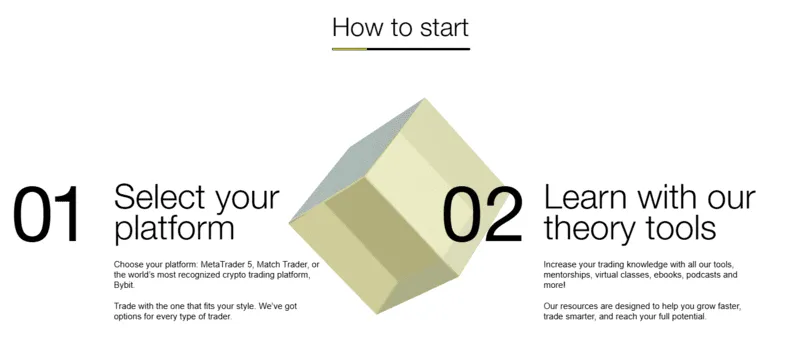
All you need is an email, a minimal budget for the challenge (from $50 to several hundred dollars depending on your chosen account size), and an understanding of the basics of crypto trading. Let’s walk through the whole path step by step — from registration to your first profit withdrawal.
Step 1. Choose your challenge type and capital size.
After registering on the official site, you land in your dashboard, where you need to choose an evaluation program. There are two main options here: a one-step challenge (more expensive, but faster) or a two-step challenge (cheaper, but longer). Beginners are usually recommended to start with a minimum $5,000–$10,000 account on the two-step challenge — this lets you get a feel for the rules without losing much money in case of failure. Experienced traders can go straight for $50,000–$100,000 accounts if they’re confident in their strategy and ready for tighter risk management. At this stage, carefully study the terms: the profit target, maximum drawdown, daily loss limit, and minimum number of trading days.
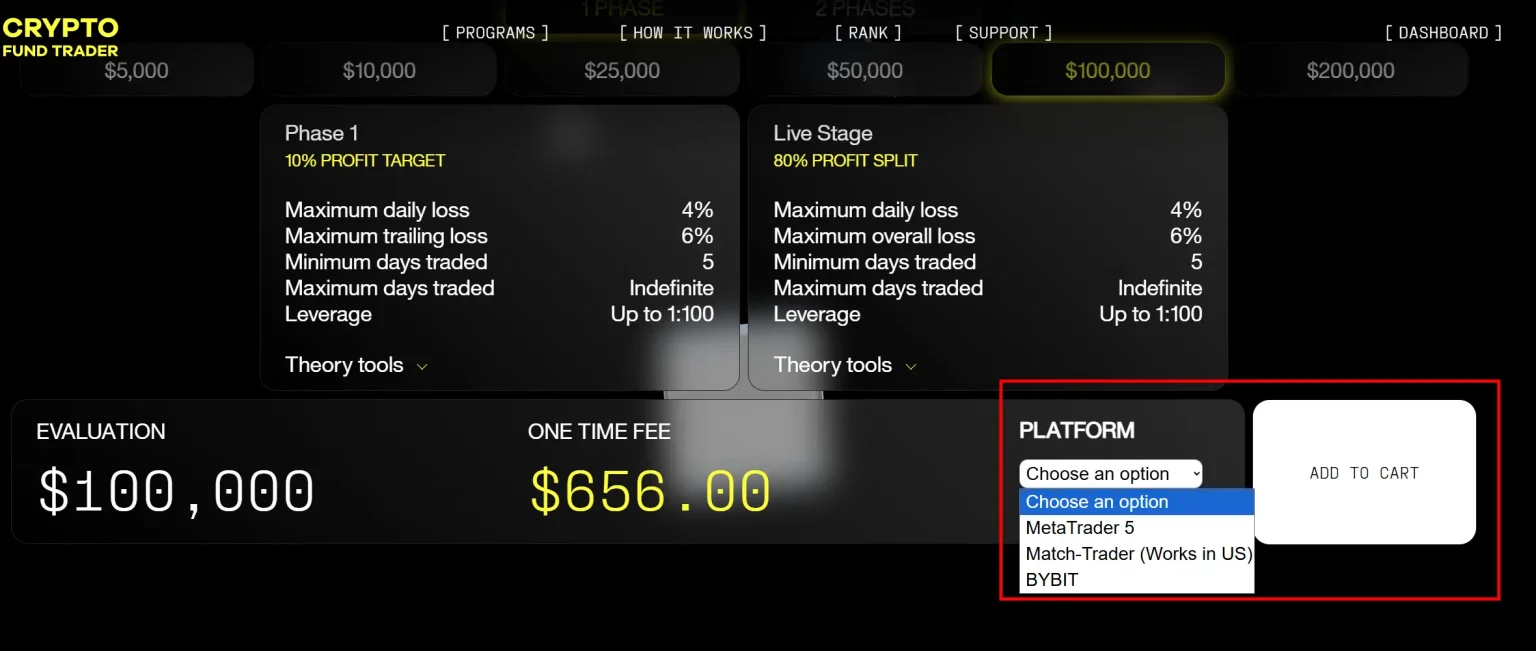
Step 2. Pay for the challenge.
Once you’ve decided on your challenge type and size, move to payment. Crypto Fund Trader accepts both crypto (Bitcoin, Ethereum, USDT) and traditional methods like bank cards and PayPal. Cost starts at $50–100 for the minimum challenge and can run up to $1,000+ for accounts at $200,000–$300,000. If you have a promo code from a partner or a referral link, enter it at this stage — you can get a 5–10% discount. After successful payment, access to your demo account activates automatically within a few minutes.
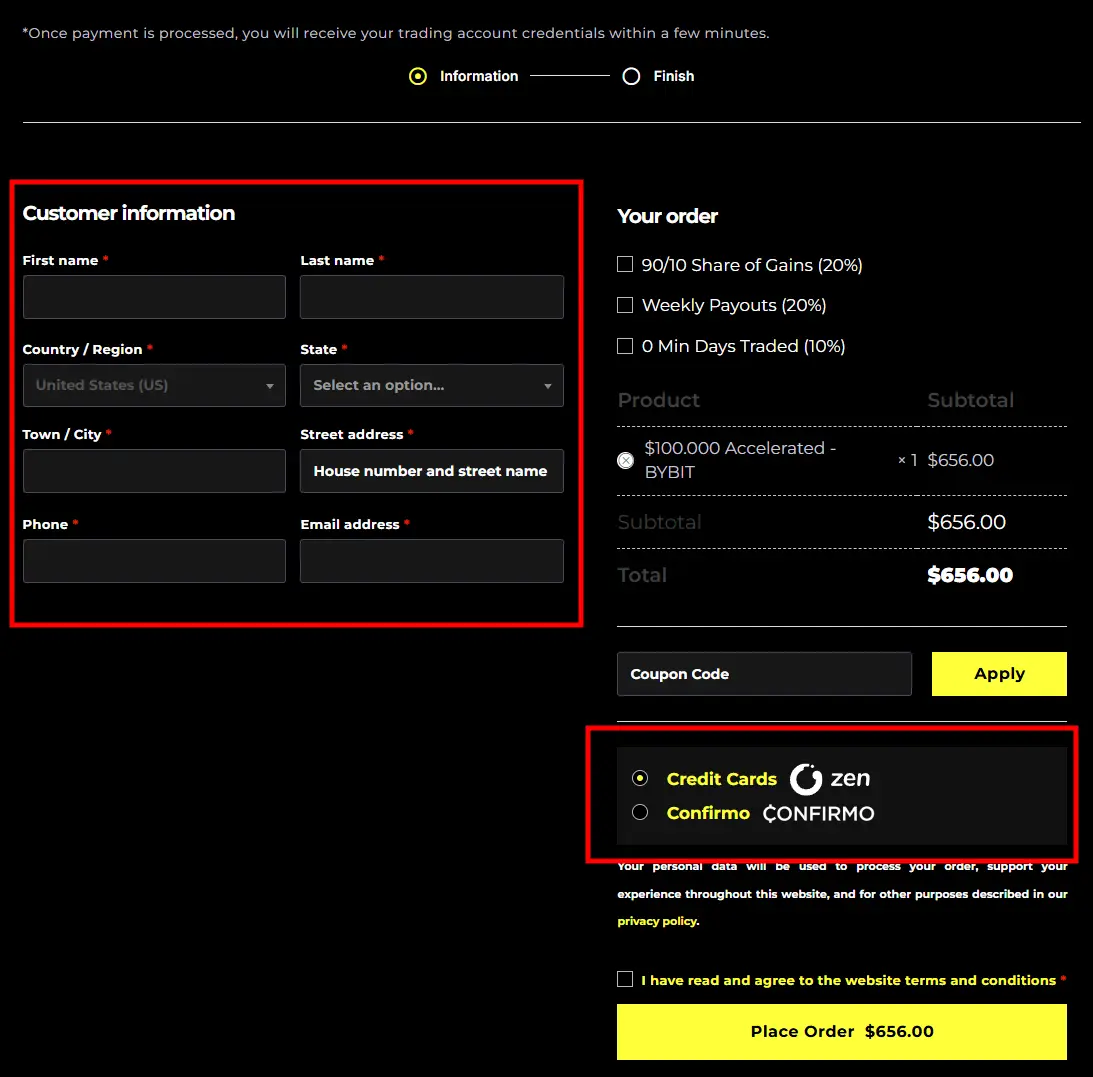
Step 3. Connect to an exchange and set up your trading terminal.
Now for the interesting part — connecting your CFT account to a crypto exchange. The platform supports integration with Binance, Bybit, and OKX via API keys. Go into your exchange account settings, generate an API key with permission to read your balance and execute orders (but no withdrawal permission — that’s important for security), and enter those details in your CFT dashboard. Once synced, you’ll see your demo account with a virtual balance you need to grow according to the challenge terms. You can trade right through the exchange terminal — every trade you place gets tracked by the CFT system in real time.
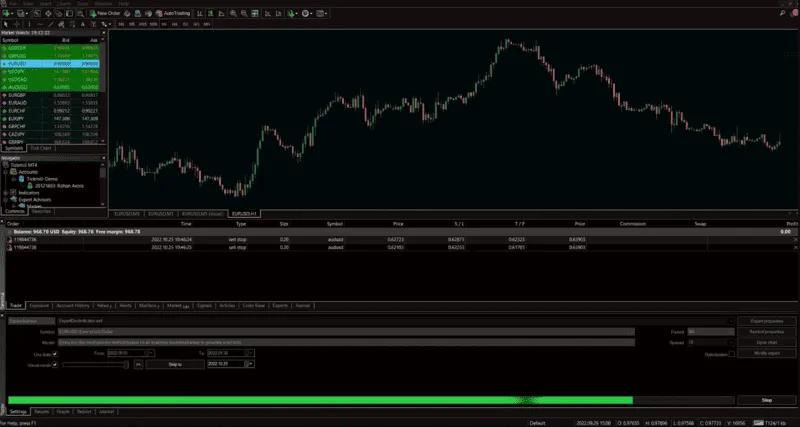
Step 4. Clear the challenge (Phase 1 and Phase 2).
Now you start trading within the set rules. Your job is to hit the profit target without exceeding the loss limits, while trading a minimum number of days. For example, on the two-step challenge, Phase 1 requires earning 8% profit with a maximum drawdown of 5% and a daily loss limit of 5%. Sounds simple, but in practice it demands iron discipline: one emotional bout of overtrading or a bad piece of news, and you can blow the account in a couple of hours. It’s important to keep a trading journal, watch your position sizes, and never break risk-management rules under any circumstances. After successfully finishing Phase 1, you automatically move to Phase 2, where the terms are slightly gentler (a 5% profit target), but the consistency requirements are higher.
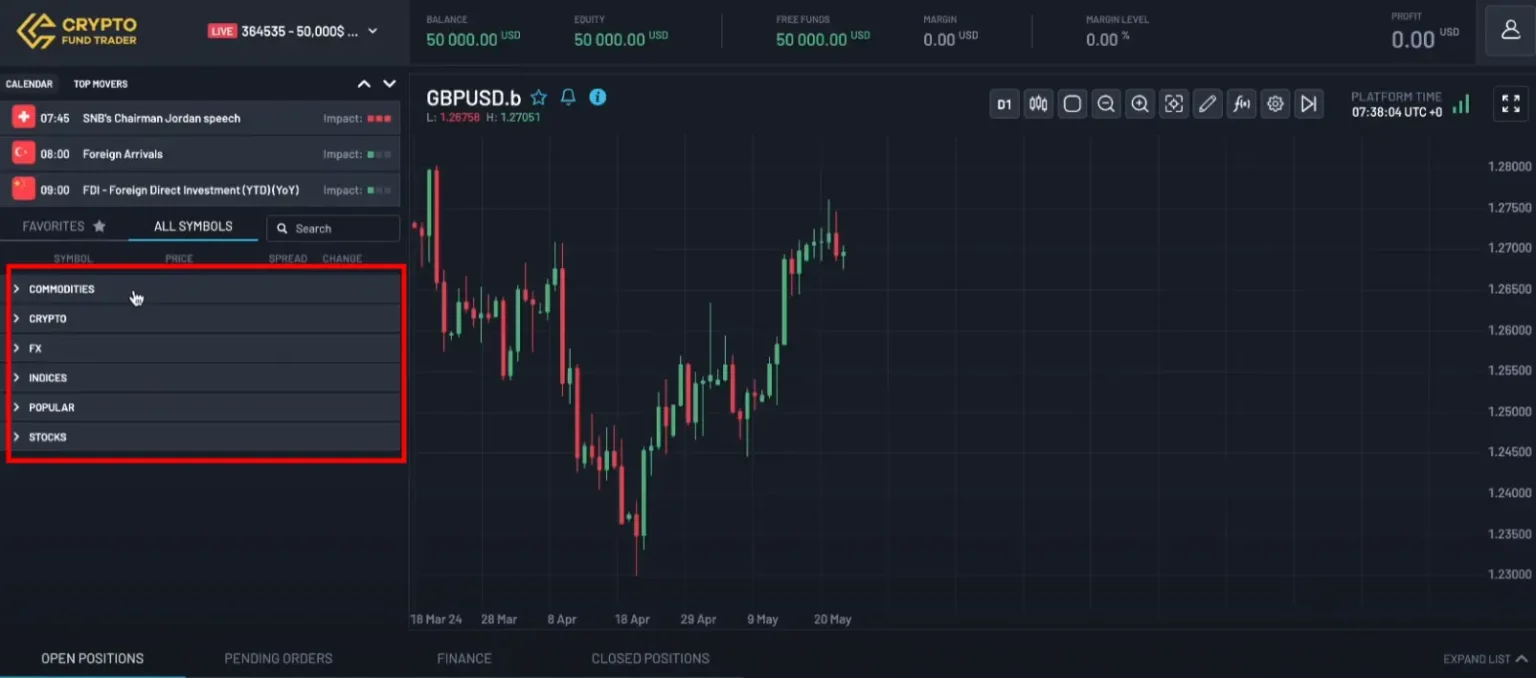
Step 5. Get your funded account.
If you clear every stage of the challenge, congratulations — you get a funded account with real capital. At this stage, the company may ask you to complete additional identity verification (KYC): upload a scan of your passport or driver’s license, a selfie with the document, and proof of address. This is a standard procedure for legitimate financial companies, helping fight fraud and money laundering. After completing KYC, you’re granted a real trading account at the capital level you cleared the challenge for — say, $10,000 or $50,000.
Step 6. Trade the real account and withdraw profit.
Now you’re trading with the company’s real money, not a demo. The rules stay the same: you can’t exceed maximum drawdown or the daily loss limit. The difference is you can now withdraw your share of the profit — usually 80% of what you earn. Payouts happen twice a month: submit a withdrawal request in your dashboard, and the money arrives at your crypto wallet or bank card within 3–7 business days. Important nuance: your first withdrawal usually only happens after you’ve traded a minimum of 10–15 days on the funded account — protection against anyone trying to earn from one lucky trade and immediately cash out.

Step 7. Scale and grow your capital.
If you trade consistently and don’t break the rules for several months straight, you get the chance to upgrade your account. The company may offer to grow your capital to $100,000, $200,000, or even $300,000. To qualify, you typically need to show a win rate above 50%, consistent profit with no major drawdowns, and a professional approach to risk management. Some traders run several challenges in parallel across different accounts to diversify strategies and increase overall income — though that requires significantly more time and attention.
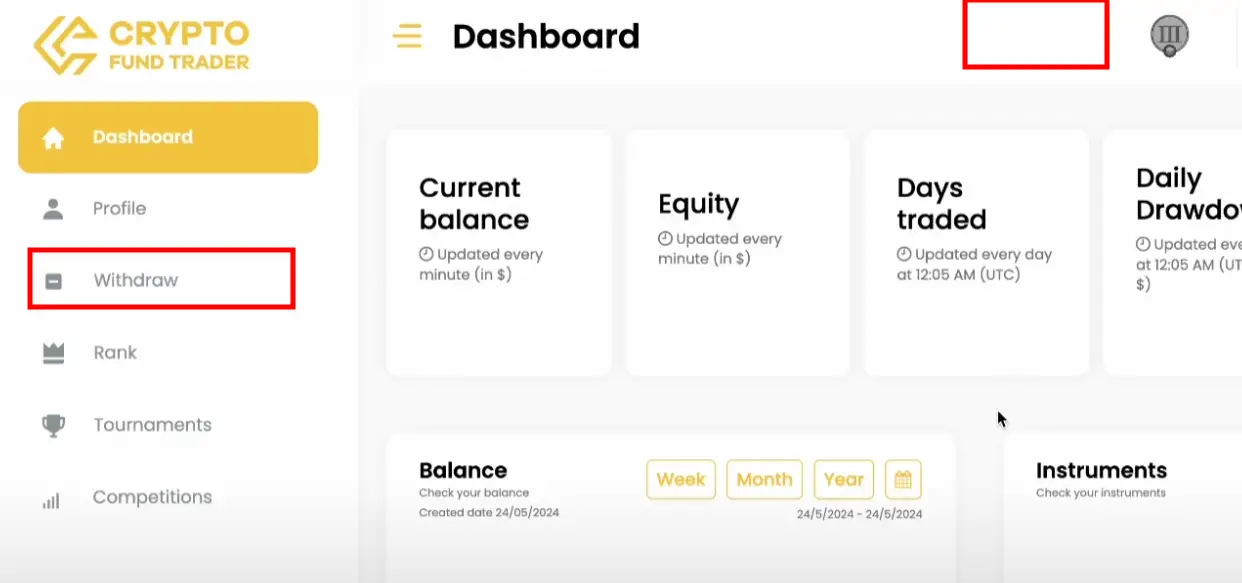
The whole process from registration to your first profit withdrawal can take anywhere from one to three months, depending on your experience, strategy, and luck. The main thing is not to rush, strictly follow the rules, and treat prop trading like a job, not a casino. Approach it wisely, and Crypto Fund Trader can genuinely become a source of steady income with no need to risk your own capital.
Beginner Mistakes and How to Avoid Them
On Crypto Fund Trader (and in crypto prop trading in general), beginners often step on the same rakes, regardless of strategy or chosen exchange. The most frustrating part is that most mistakes are entirely preventable if you carefully read the terms and don’t chase fast profit. Here are the main traps beginners fall into, and tips for avoiding them.

Top mistakes made by beginner traders on Crypto Fund Trader:
- Ignoring risk-management rules. The most common, fatal mistake — a trader risks too large a share of the deposit on a single trade or skips the stop-loss entirely. On CFT, this leads to an automatic account lockout: if you exceed your daily loss limit or maximum drawdown by even a dollar, the system instantly cuts off access.
- Confusing trailing drawdown with a fixed limit. Many beginners don’t understand that CFT’s trailing drawdown is calculated not just off balance, but off equity (the account’s current value including open positions). If a drawdown hits during an open trade, the limit moves, and you can blow the challenge even while technically in profit.
- Overtrading and trying to “win back” losses. After a loss, traders rush to open new trades to quickly recover — which often ends in blowing the entire account. Professionals recommend taking a break, analyzing the mistake, and re-entering the market only on a clear signal.
- Trading every market at once. Beginners jump into dozens of instruments, unable to keep up with the volatility and news for each one. It’s better to pick a couple of popular, liquid pairs (say, BTC/USDT, ETH/USDT) and sharpen your strategy on those specifically.
- Emotional decisions and abandoning the trading plan. Beginners often change strategy “on the fly,” are afraid to lock in losses, or, conversely, close profitable trades too early out of fear of losing what they’ve earned. Success comes to those who follow a plan set in advance and can control their emotions.
- Trading with no system and blindly copying other people’s trades. Blind copy trading can blow an account fast if you don’t understand the logic behind the positions being opened. It’s better to learn from others but build your own system and understand every trade you make.
How to avoid these mistakes
- Always set a stop-loss, capping risk on a single trade at 1–2% of the deposit.
- Carefully study the platform’s rules: trailing drawdown, how equity is calculated, restrictions on open trades, and the minimum number of trading days.
- Don’t rush: refine your strategy on demo until you’re consistently in the green, then apply it methodically on the challenge.
- Keeping a trading journal helps avoid repeating mistakes, and regularly reviewing your trades reveals weak spots in your strategy.
- Learn to control your emotions: if you hit a losing streak, take a break and return to the market only with a clear head.
- Gradually expand your traded assets, but start with 1–2 pairs to reduce the strain on your attention and improve analysis quality.
- Study fundamental analysis as well as technical, so you don’t fall into the trap of “unexpected” news.
Crypto Fund Trader Reviews
Crypto Fund Trader’s online reputation is fairly mixed — like most prop firms. On one hand, the platform has a solid user base of 500,000+ traders and has operated since 2021 with no major scandals. On the other, you can find both glowing reviews from successful traders and harsh criticism from those who lost money on challenges or ran into withdrawal issues.
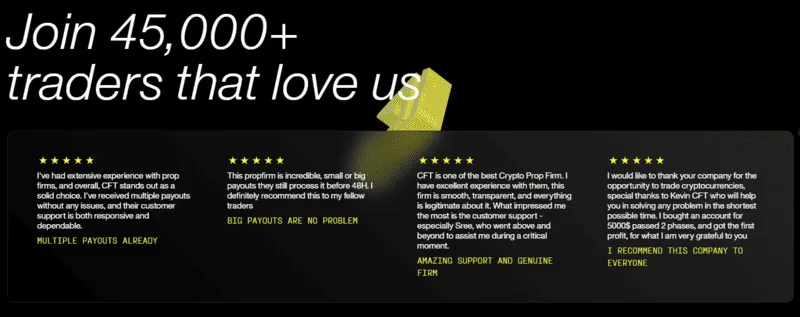
On the popular review site Trustpilot, the company holds mixed ratings. Positive reviews typically praise fast payouts (twice a month), a wide selection of trading pairs, convenient integration with Binance and Bybit, and responsive support that quickly resolves technical issues. Traders note that if you strictly follow the rules and don’t break the limits, withdrawing profit goes smoothly. Some users share screenshots of successful payouts worth several thousand dollars, confirming the platform’s legitimacy.
Negative reviews are most often tied to account lockouts for rule violations that traders felt were too strict or unclear. The main complaints: sudden disqualification for exceeding trailing drawdown (even while the trader was in profit), delays processing KYC verification, slow support response to disputed situations, and a lack of detailed explanations for lockouts. Some users complain the company “looks for reasons not to pay,” locking accounts under the pretext of violations that weren’t clearly spelled out in the rules.
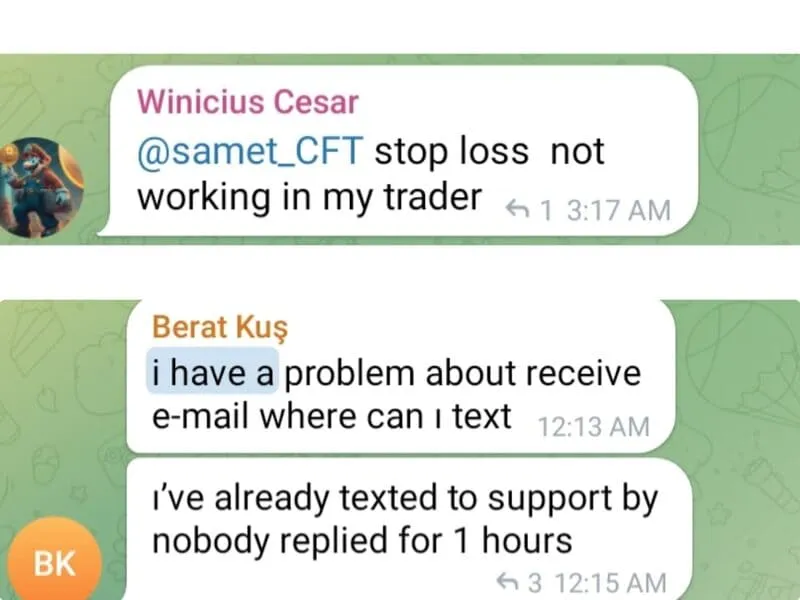
Opinions across forums and Telegram channels are similarly split. Experienced traders recommend CFT as a decent option for getting started in crypto prop trading — especially given the 5–10% discount promo codes. Beginners, on the other hand, often blow their challenges from inexperience and then accuse the platform of “fraud.” It’s important to understand: prop firms make money by selling challenges, not by locking out successful traders — it’s far more profitable for them if you trade consistently and generate profit.
The overall takeaway from the reviews: Crypto Fund Trader is a legitimate platform with real payouts, but one that demands strict rule compliance and a professional approach. If you’re ready to trade with discipline, study the terms, and avoid “all-in” style risk-taking, the platform can be a good income source. If you’re looking for “easy money” and don’t want to bother with risk management, it’s better to look elsewhere.
Growth Prospects
Crypto Fund Trader sits at the intersection of two powerful trends — the prop trading boom and growing interest in crypto — which opens serious growth opportunities for the company. By expert forecasts, the crypto market could reach a $10 trillion valuation within the next 2–5 years, with tokenized real-world assets (RWA) adding another $30–40 trillion. That means a huge influx of new traders who’ll need platforms for professional trading with no risk to their own capital — exactly what CFT offers.

Crypto market regulation is both a challenge and an opportunity for growth. In 2026, oversight from financial regulators is intensifying — the CFTC and SEC are actively studying algorithmic trading methods, pushing the crypto industry closer to traditional financial-market standards. For Crypto Fund Trader, that means a need to increase transparency, improve KYC procedures, and clearly spell out trading rules. Companies that adapt first to new requirements will gain a competitive edge and the trust of institutional clients.
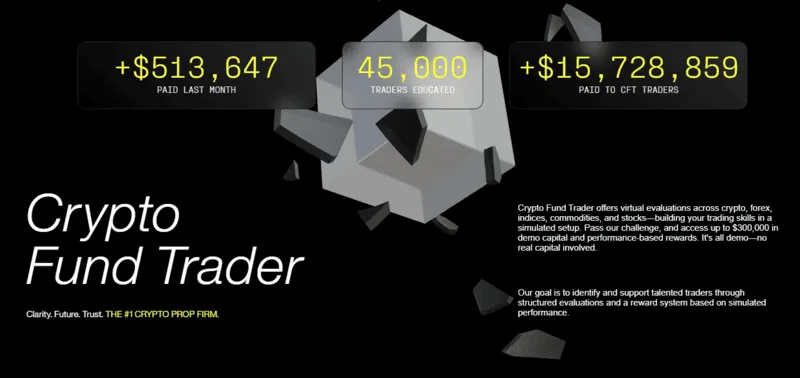
The education track could become an additional growth source. According to the company’s own data, more than 30,000 traders have been trained. CFT could grow an academy with paid and free courses, webinars from successful traders, strategy breakdowns, and a community of professionals. That wouldn’t just attract new users — it would raise overall trading quality, meaning more traders clearing challenges and generating profit for the company.
CFT’s user base today spans dozens of countries across Europe, the Americas, and Asia, reflecting broad international demand for accessible crypto funding. Expanding into Asian markets (China, India, Southeast Asia), Latin American countries, and the African continent could multiply the user base many times over. Localizing the platform, supporting local languages, and adapting to regional specifics are the keys to success in new markets.
Partnerships with major exchanges and institutional players could take CFT to a new level. Working with Binance, Bybit, OKX, and other industry leaders would give access to exclusive tools, better spreads, and priority support. Integration with DeFi protocols, lending platforms, and liquidity pools would open even more earning opportunities for traders.

Competition in the prop trading market will only intensify. Dozens of new companies pop up every year with aggressive terms, low challenge prices, and innovative approaches. To hold onto its leadership, Crypto Fund Trader needs to not just improve its service, but stay flexible: lowering entry barriers for beginners, offering personalized programs for pros, and actively engaging with the community through social media and forums.
Conclusion
Crypto Fund Trader is a genuine opportunity for crypto traders to enter professional trading with no risk to their own capital. The company offers access to capital up to $300,000, more than 715 crypto trading pairs, an 80/20 profit split, and payouts twice a month — terms that look appealing against the competition. Over three years in business, the platform has attracted more than 500,000 traders from countries across the globe and established itself as a legitimate player in the prop trading niche.
That said, it’s important to understand that CFT isn’t a “lottery” or a way to get rich quick. The platform demands a professional approach: strict risk-management compliance, discipline, consistency, and a willingness to learn from mistakes. Tight trailing drawdown and daily loss limits might scare off beginners used to trading impulsively, but it’s exactly these restrictions that shape professional traders. If you’re ready to follow clear rules and not breach the limits, your odds of success rise significantly.
Is it worth trying Crypto Fund Trader? Absolutely — if you have a proven trading strategy, an understanding of the crypto market, and a willingness to invest time in studying the platform’s rules. CFT suits day traders and scalpers as well as swing traders working with longer-term positions. No hard deadlines for clearing the challenge, the ability to trade on popular exchanges like Binance and Bybit, and flexibility in choosing trading strategies make the platform a versatile tool for different types of traders.

For anyone just starting out in prop trading, the PropTradingRank.com team recommends starting with a minimum challenge at $5,000–$10,000. This lets you get a feel for the rules without major financial losses and understand whether this model suits you. Use the 5–10% discount promo codes regularly published by CFT partners, and be sure to try the demo version of the challenge before buying the real one. Keep a trading journal, analyze every trade, and don’t repeat mistakes — that’s the only way to reach consistent profit and start getting real payouts.
In 2026, crypto prop trading keeps gaining momentum, and Crypto Fund Trader has every chance of strengthening its market position. Technology development, expanding features, improving educational programs, and adapting to regulatory requirements will all make the platform even more appealing to professionals. The main thing to remember: success in prop trading depends not just on service quality, but on your own discipline, strategy, and willingness to keep learning.
Frequently Asked Questions
How much does it cost to enter a Crypto Fund Trader challenge?
Challenge cost on Crypto Fund Trader varies depending on your chosen account size and evaluation program type. The minimum entry starts at roughly $50–58 for a challenge on a $5,000 account, and the top packages at $200,000–$300,000 can cost $800 to $1,500 and up. The two-step challenge is usually 30–40% cheaper than the one-step, since it requires clearing two evaluation phases, but lets you start with a smaller budget. It's important to understand this amount isn't refunded if you fail the challenge — you simply lose access to the demo account and the fee paid. That said, many prop firms, including CFT, periodically offer 5–10% discount promo codes, which you can find through partner channels on Telegram or specialized sites. There's also a 14-day money-back guarantee if you haven't opened a single trade — a kind of "insurance" for anyone who changes their mind about participating.
Can you trade crypto around the clock, including weekends?
Yes, one of Crypto Fund Trader's biggest advantages is the ability to trade crypto 24 hours a day, 7 days a week, including weekends and holidays. Unlike traditional markets like Forex or stocks, which close overnight and on weekends, the crypto market never sleeps. That means you can combine prop trading with a day job, trading whenever suits you — even at night or early morning. There's an important nuance, though: some prop firms ban holding open positions over the weekend due to elevated volatility risk, when liquidity drops and sharp gaps can occur. It's worth carefully studying this point in CFT's rules — you may need to close every trade before Saturday or use more conservative stop-losses when trading on weekends.
How fast are profit payouts on Crypto Fund Trader?
Crypto Fund Trader offers payouts twice a month, significantly faster than many competitors with monthly withdrawals. After submitting a profit-withdrawal request in your dashboard, money typically arrives within 24–48 hours, though in some cases the process can take up to 3–7 business days depending on your chosen payment method. It's important to understand your first payout usually only happens after you've traded a minimum of 10–15 days on the funded account — protection against traders trying to earn from one lucky trade and immediately cash out. The company supports various withdrawal methods: crypto (Bitcoin, Ethereum, USDT), bank transfers, and payment systems like PayPal. That said, reviews do mention complaints about payout delays of up to 14 days and support issues, which doesn't always respond promptly to requests. So actual withdrawal speed may differ from what's advertised, depending on system load and the specific situation.
What is trailing drawdown, and why does it blow so many challenges?
Trailing drawdown (скользящая просадка) — это один из самых коварных параметров в проп-трейдинге, который часто становится причиной провала даже у опытных трейдеров. В отличие от фиксированной просадки, которая считается от начального баланса, trailing drawdown движется вслед за ростом вашего equity (текущей стоимости счета с учетом открытых позиций). Например, если вы начали с $10,000 и заработали $1,000, ваш новый максимум equity стал $11,000, и trailing drawdown в 5% теперь составляет $550 от этой суммы, а не от начальных $10,000. Если рынок развернется и ваш счет упадет ниже разрешенного лимита, даже если вы все еще в плюсе от начального баланса, система автоматически заблокирует аккаунт. Многие новички не понимают этот механизм и теряют челленджи именно из-за trailing drawdown, когда после успешной серии сделок открывают слишком большую позицию и получают резкую просадку. Чтобы избежать этой ловушки, нужно постоянно следить за метриками в личном кабинете, использовать консервативные стоп-лоссы и не рисковать больше 1-2% от текущего equity в одной сделке.
Are trading bots and automated strategies allowed?
The question of using trading bots (Expert Advisors, EAs) and automated strategies on Crypto Fund Trader needs special attention, since the rules can vary depending on the challenge type. Overall, the platform allows bots, but with serious restrictions: high-frequency (HFT) strategies, cross-exchange arbitrage, copy trading from other accounts, and using third-party off-the-shelf systems without company approval are all banned. If you want to trade through a bot, it's best to message support in advance and get official permission, describing how your strategy works. The problem is that many prop firms treat automated trading as an attempt to "game the system" and may lock the account even after a successful challenge pass. In reviews, users complain that CFT deletes complaints on Discord, ignores emails, and denies payouts with no explanation if it detects suspicious activity. So if you're planning to use automation, act as transparently as possible and get written confirmation from the company to avoid problems when withdrawing profit.
What should you do if you don't clear the challenge on your first try?
Failing a challenge is a completely normal situation that even experienced traders run into. Statistics show only 10–15% of participants clear the evaluation on their first attempt, so there's no reason to get discouraged and give up. The first thing to do after a failure is thoroughly analyze your mistakes: review your trade history, identify moments where risk-management rules were broken, and understand exactly what led to the failure. Maybe the problem was overtrading, oversized positions, missing stop-losses, or emotional decisions after a losing streak. Many traders recommend practicing on a free demo account before buying a new challenge, refining your strategy until it's consistently profitable, and only then going for the real evaluation. Crypto Fund Trader doesn't ban repeat participation, so you can buy a new challenge anytime — the key is accounting for your previous mistakes and approaching it more mindfully. It's also recommended to start with a minimum account at $5,000–$10,000, to reduce financial losses and psychological pressure while trading.
Trader Reviews
Related Articles:


















Top 10 Best Prop Firms
| # | Prop Firm | Rating | Assets | Profit Split | Funded Capital | Challenge Fee | Founded | Promo Code | Website |
|---|---|---|---|---|---|---|---|---|---|
|
1
|
4.9
|
Crypto, Stocks, Indices, Metals, Energy
|
Up to 90% | Up to $200,000 | From $79 | 2023 |
20% discount
RANK20
|
Visit Website | |
|
2
|
4.8
|
Crypto, Forex
|
Up to 90% | Up to $200,000 | From $99 | 2023 |
20% discount
RANK20
|
Visit Website | |
|
3
|
4.7
|
Prediction Markets, Polymarket
|
Up to 90% | Up to $50,000 | From $30 | 2026 |
25% discount
RANK25
|
Visit Website | |
|
4
|
4.7
|
Crypto, Forex, Other Assets
|
Up to 90% | Up to $200,000 | From $59 | 2024 |
10% discount
Follow the link
|
Visit Website | |
|
5
|
4.7
|
Crypto
|
Up to 90% | Up to $200,000 | From $59 | 2023 |
10% discount
Follow the link
|
Visit Website | |
|
6
|
4.6
|
Crypto, Forex, Stocks, Indices, Metals, Energy
|
80%–100% | Up to $200,000 | From $49 | 2026 |
30% discount
RANK30
|
Visit Website | |
|
7
|
4.6
|
Forex, Stocks, Indices, Metals
|
Up to 90% | Up to €300,000 | From €40 | 2023 |
30% discount
RANK30
|
Visit Website | |
|
8
|
4.5
|
Crypto, Forex, Indices, Metals
|
80%–100% | Up to $200,000 | From $89 | 2013 |
No Promo Code
|
Visit Website | |
|
9
|
4.5
|
Crypto, Forex
|
Up to 90% | Up to $200,000 | From €79 | 2015 |
No Promo Code
|
Visit Website | |
|
10
|
4.3
|
Crypto, Forex, Other Assets
|
60%–95% | Up to $200,000 | From $32 | 2024 |
20% discount
HELLO
|
Visit Website |